Software looks different depending on where you stand.
In engineering, we build different "views" into the same system so people only see what they need to do their best work. Choose your view below to understand the technology concepts that shape your day-to-day.
I guide the organization
Understand the real cost of legacy systems, plan sustainable technology roadmaps, and build secure foundations that scale with your mission.
I do the daily work
Learn how workflow automation, databases, and smart design can eliminate manual data entry and give you back your time.
I am part of the community
Learn how modern authentication keeps your data safe, how privacy is engineered from the ground up, and how tools are built to be accessible for everyone.
Go further, if you're curious.
Four visual models that explain how the concepts above actually work — no engineering degree required.
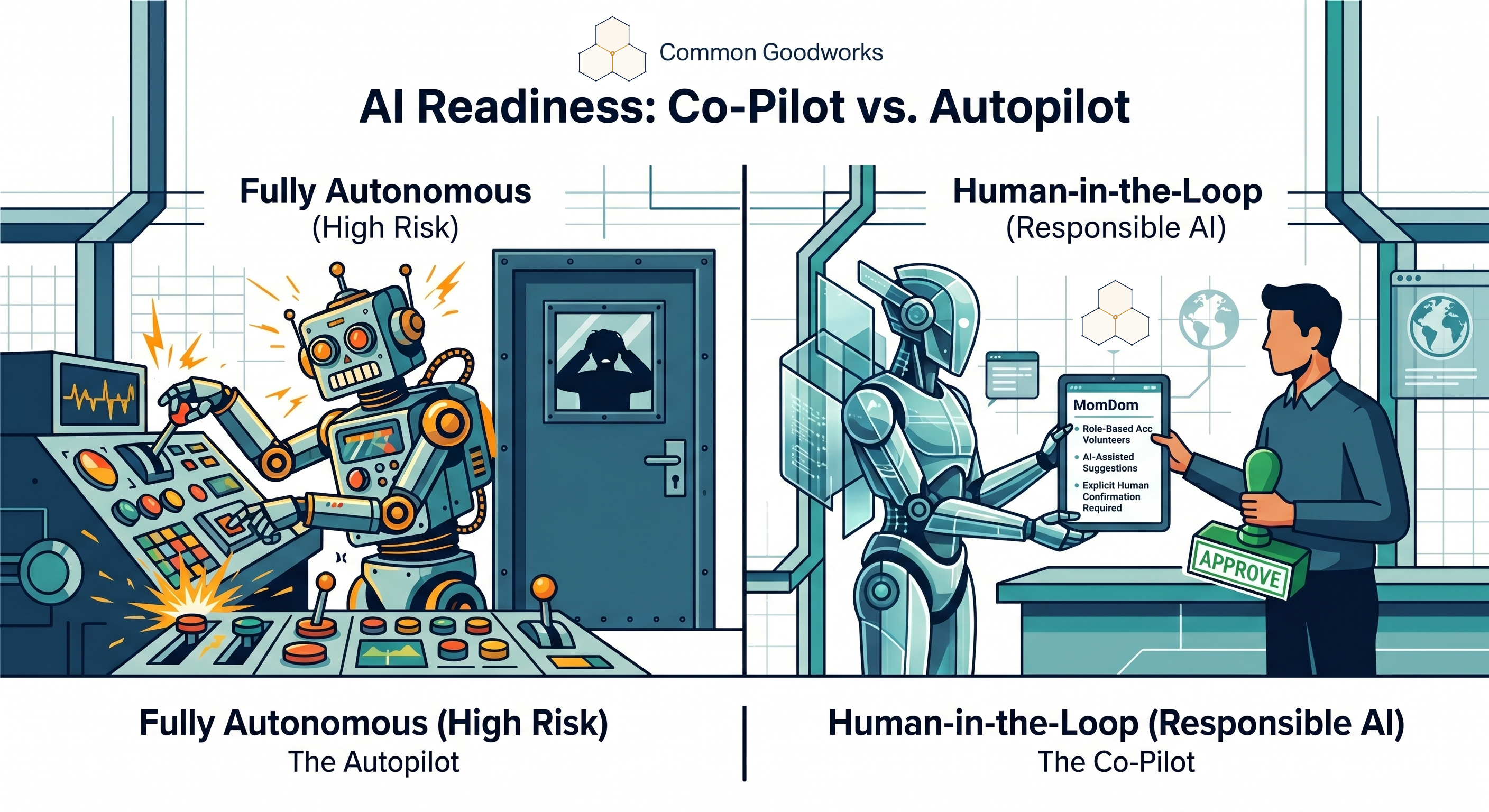
AI is your assistant, not your manager.
Artificial intelligence is a powerful tool for doing the heavy lifting — sorting data, drafting schedules, finding patterns. But in mission-driven work, context is everything. That's why we build systems where AI only suggests actions. The technology does the tedious prep work, but it cannot finalize a decision, send a message, or move data without a human explicitly clicking "Approve." You always hold the steering wheel.
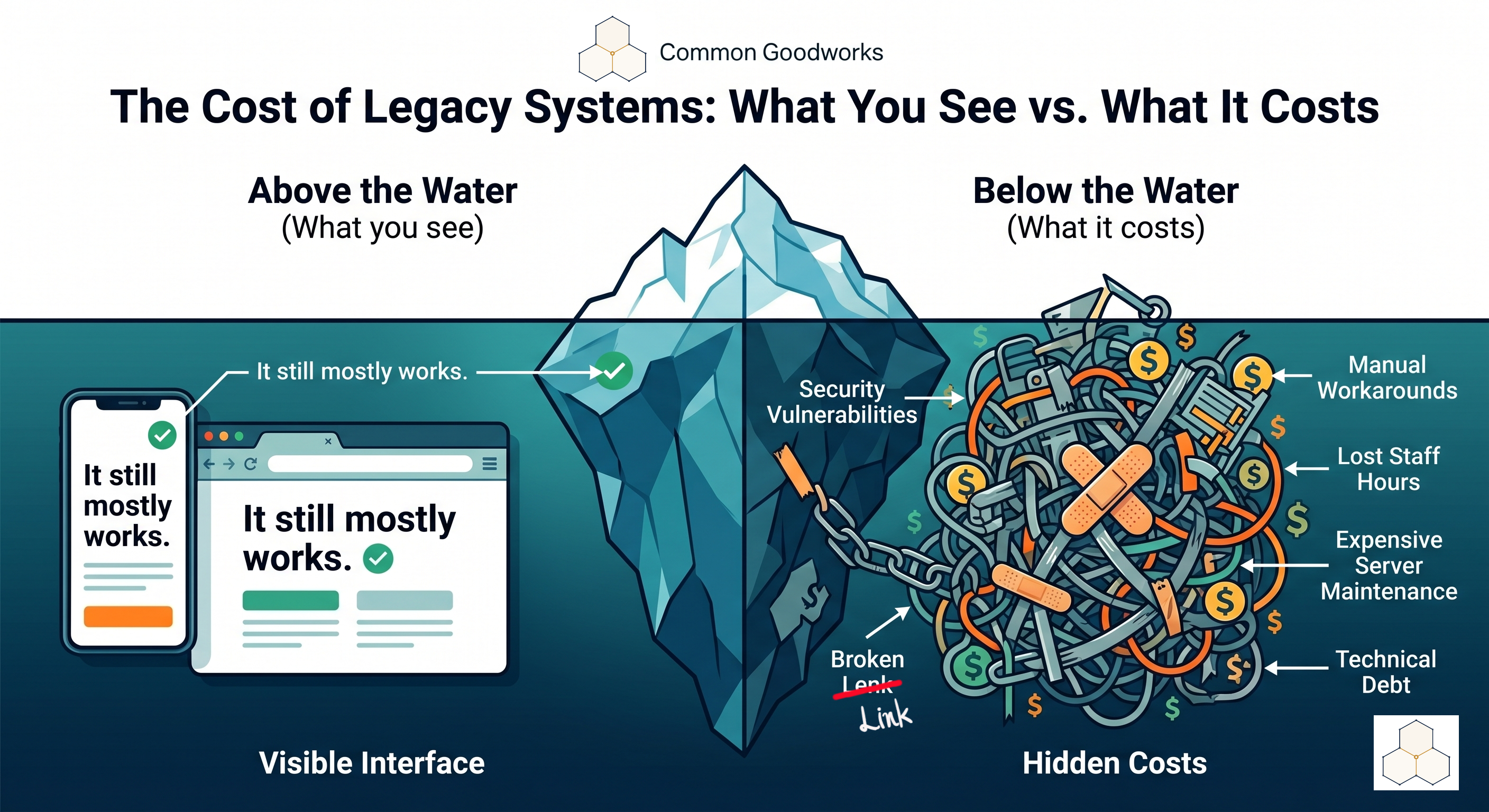
Old software isn't just outdated — it's a financial liability.
In engineering, we call this "Technical Debt." Just like paying the minimum balance on a high-interest credit card, holding onto failing software means you are constantly paying "interest" in the form of system crashes, security risks, and your team's wasted time. Modernizing your tools is a capital investment that immediately stops the bleeding, turning your technology from a constant expense into a reliable asset.
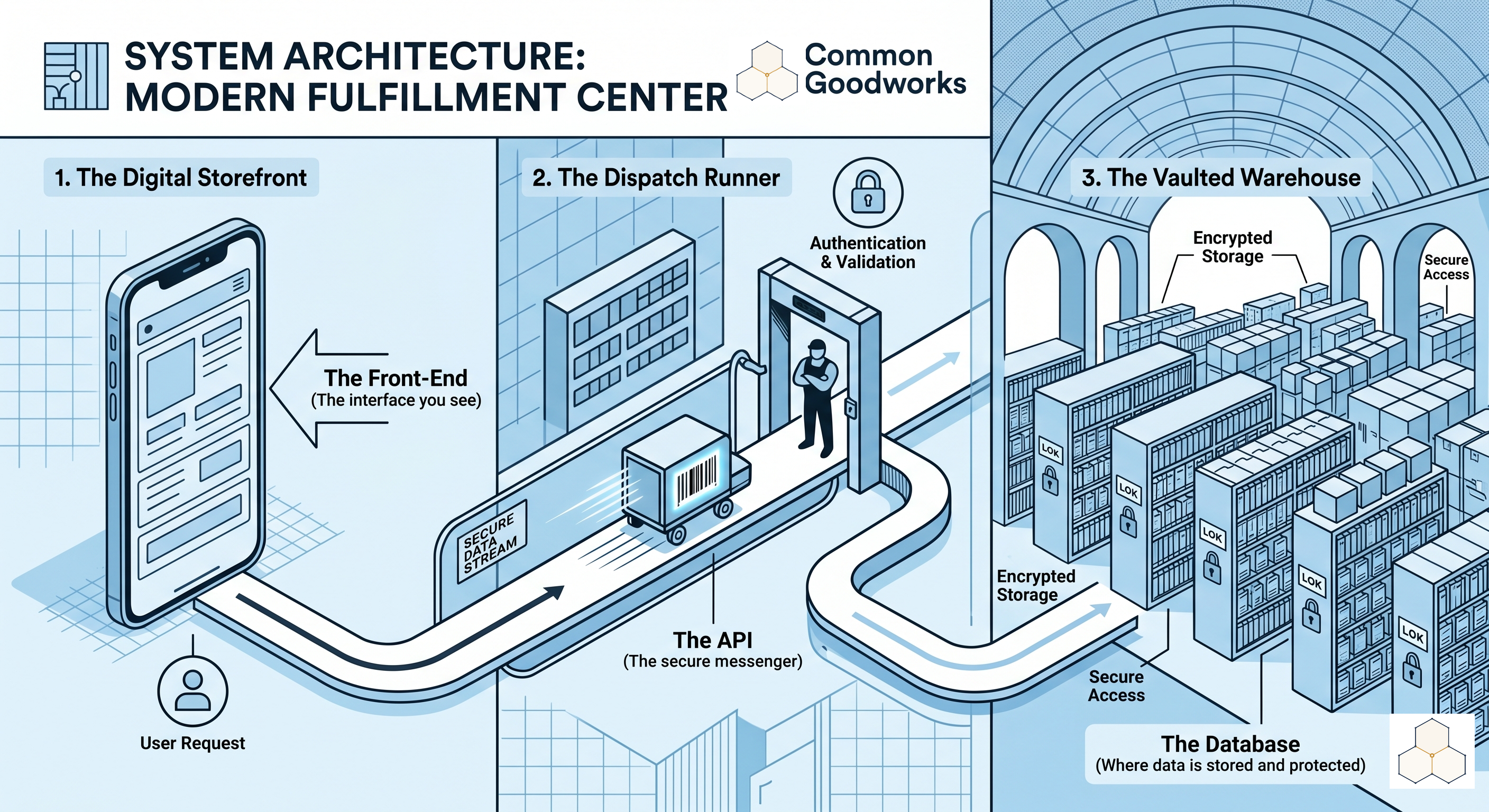
Think of modern software like a high-speed fulfillment center.
The app on your phone is the digital storefront — clean, easy to browse, and welcoming. When you hit "Submit," a secure automated runner (the API) takes your exact request, passes through a strict security checkpoint to verify your identity, and enters the warehouse. The database is the vault — highly secure, perfectly organized. The runner finds your data and delivers it back to your screen in milliseconds. This strict separation is what keeps your system fast and your data entirely safe.
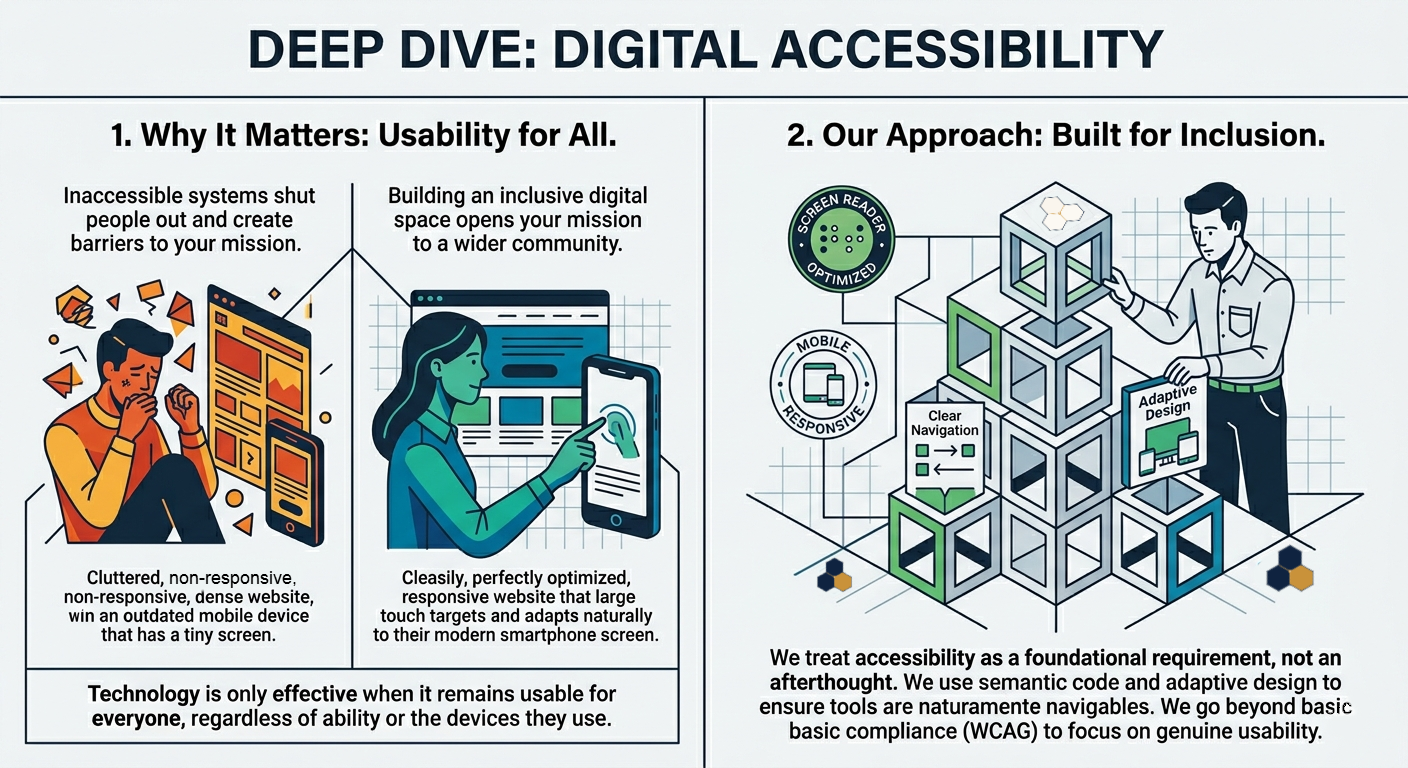
Digital spaces should be as welcoming as public parks.
Technology is only successful if the people who depend on it can actually use it. When we build software, we don’t just check a box for basic compliance. We design with "inclusive architecture" from the very first line of code. This means ensuring our tools can be seamlessly navigated by someone using a screen reader, a person relying on keyboard navigation, or a community member accessing your site from an older smartphone with a small screen. By prioritizing clean code and adaptive design, we ensure your tools—and your mission—remain open and accessible to everyone, without exception.
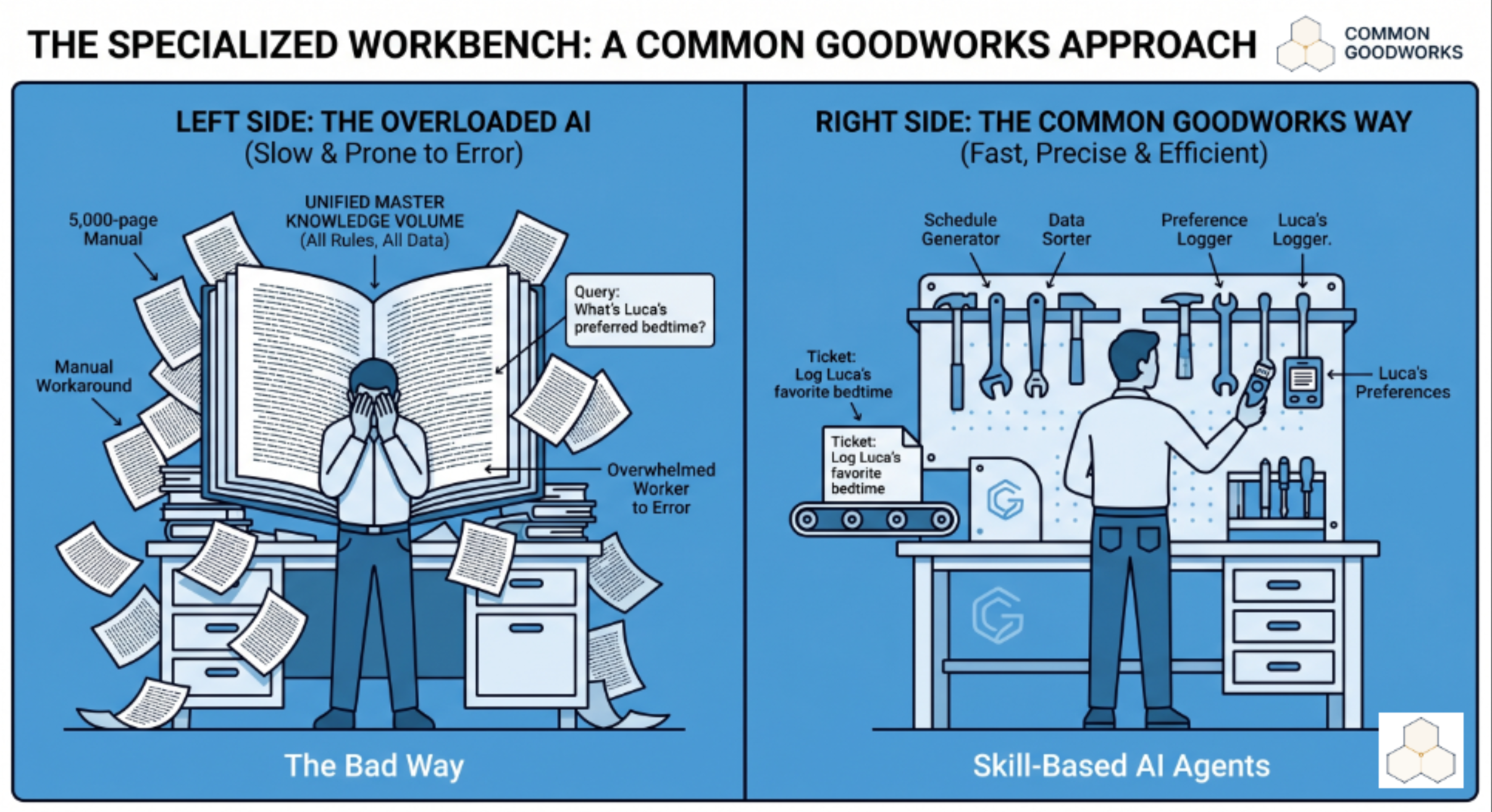
An AI shouldn't try to know everything all at once.
When people build AI poorly, they shove every single instruction, rule, and piece of data into the system at once, hoping it figures out what to do. The result is slow, expensive, and often inaccurate. We use "Agent Skills" and "Progressive Disclosure" — organizing capabilities into highly specific tools on a digital workbench. When you ask the app to perform a task, the AI reaches for only the exact instruction manual for that job, and ignores the rest. This makes the technology radically faster, cheaper to run, and highly predictable.
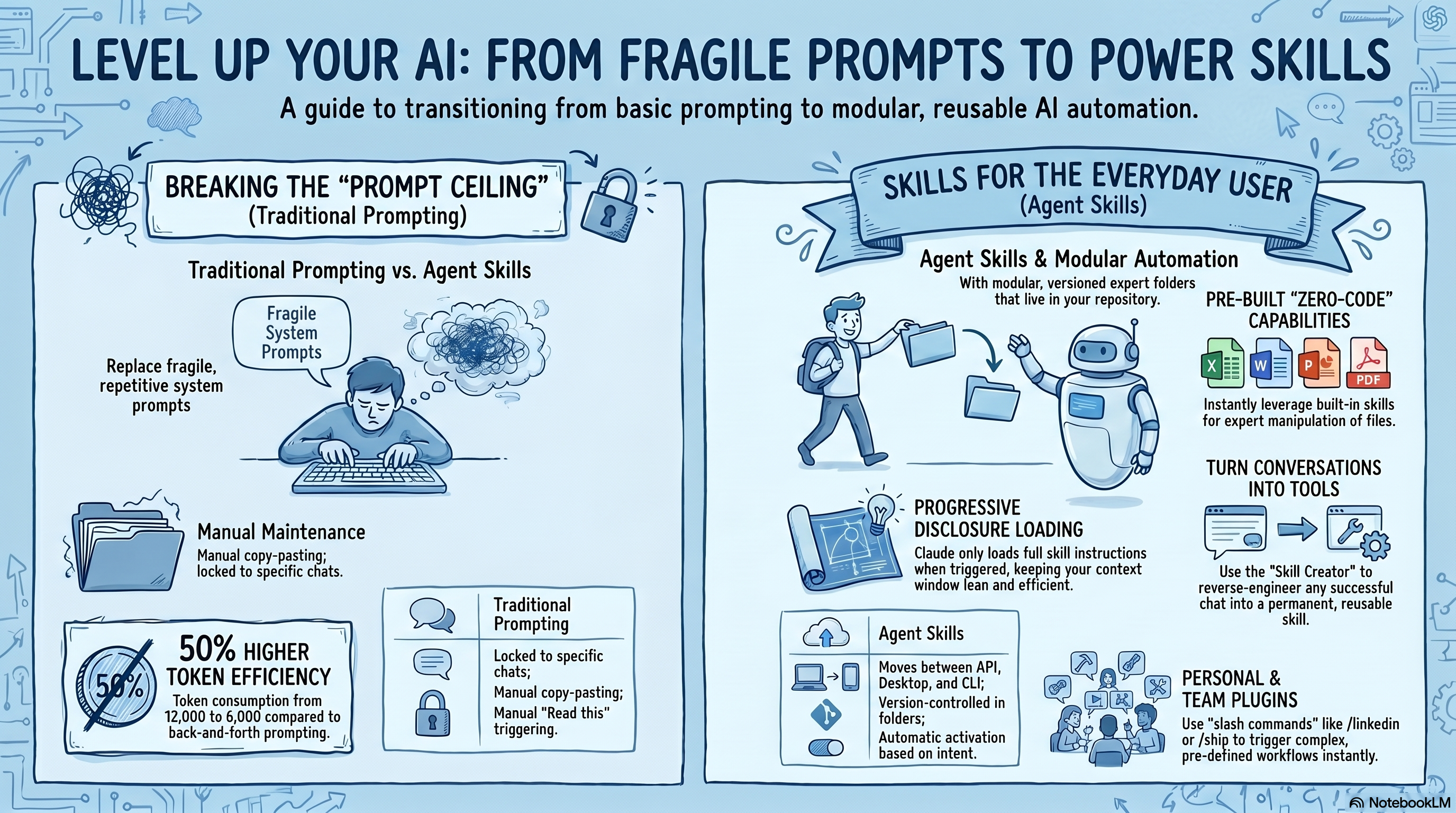
A great team of specialists always outperforms one overwhelmed generalist.
Just as a well-run organization has a bookkeeper, a communications director, and a program manager — each accountable for one domain — a well-built AI system is made of discrete agents, each expert at exactly one job. One reads your calendar. One drafts a message. One logs a preference. Because they are separate, each can be inspected, improved, or replaced without touching the others. When something goes wrong, you know precisely which specialist to look at. This is what makes AI systems not just powerful, but trustworthy and maintainable over time.